
Moses Medical on I Axis Radio
Dr. Michelle Benrimon and Moses Medical co-founder John Johnson joined the X-Tremitiez Entertainment Talk Show for its breast cancer awareness episode.
Date
Monday, October 19, 2026
Time
8:00 PM, streamed live
Location
I Axis Radio

Event recap
Details and highlights from this community event.
Breast cancer awareness on I Axis Radio
Dr. Michelle Benrimon went on live radio to talk about breast cancer, and about what care should feel like in the South Bronx. If you missed it, the clips below have the parts worth hearing.
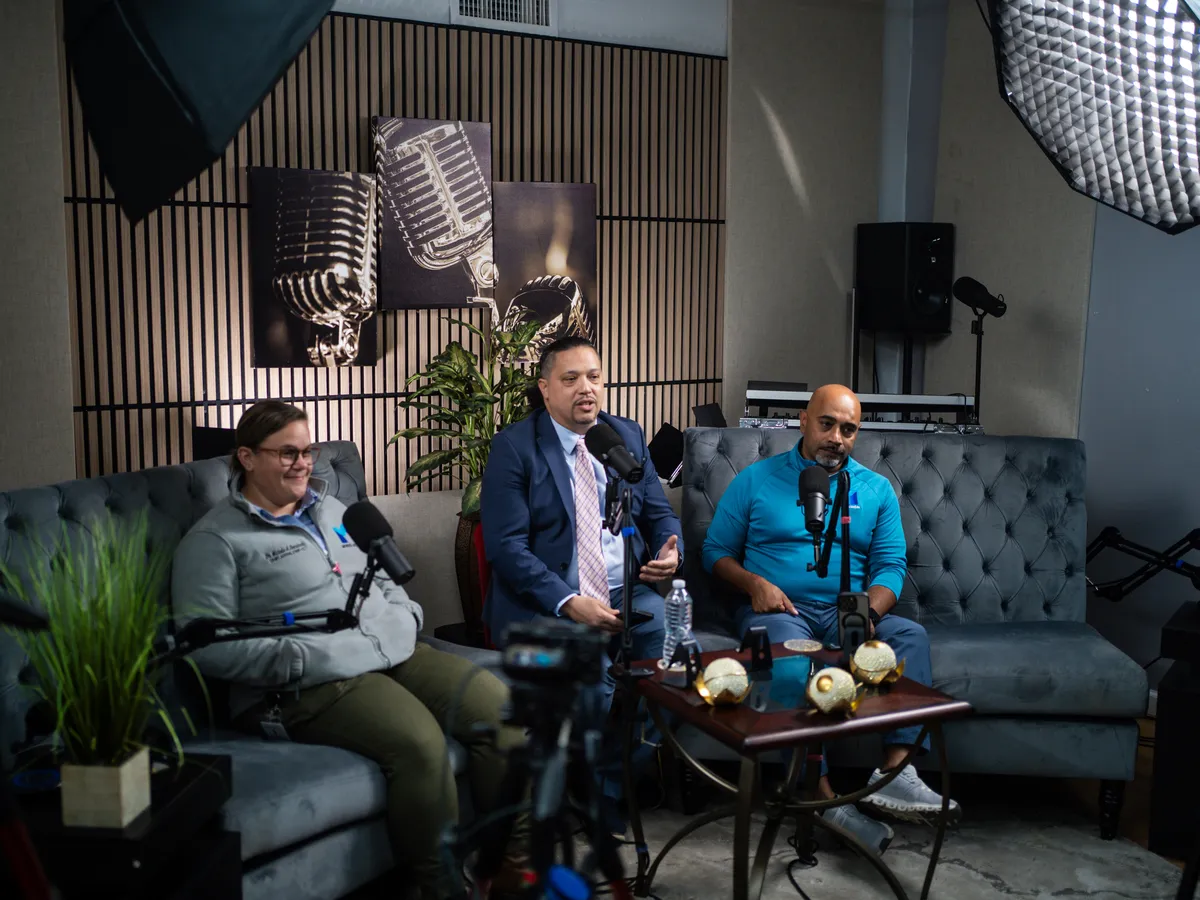
She joined Moses Medical co-founder John Johnson on the X-Tremitiez Entertainment Talk Show, hosted by Jose Rivera and streamed from the I Axis Radio studio on Monday, October 19, for the show’s breast cancer awareness episode. Dr. Benrimon is a family nurse practitioner with a doctorate in nursing practice.
John talked about growing up in the South Bronx and why he wanted a practice close to home where people are treated with respect. Later in the show, Clair-Francis Burke of the American Cancer Society talked about Making Strides Against Breast Cancer of the Bronx.
If you are due for a mammogram
Dr. Benrimon’s advice on the show:
- Women 40 to 74 should get regular mammograms.
- A family history of breast cancer, or a gene change such as BRCA, is a reason to talk with your primary care provider about screening.
- Men can get breast cancer too. Anything that feels abnormal, dimpling, skin color changes or discharge is a reason to see a provider.
- If something feels different, get it checked.
Her reason was simple. A mammogram takes less than an hour, and finding something early can spare you a much longer treatment later.
Start with a primary care visit. If scheduling or nerves are what’s stopping you, call us at (646) 741-2111 and talk it through.
Getting here
Moses Medical is at 871B Westchester Ave in the Bronx. If getting here is the hard part, the office can help you set up a ride, including Medicaid rides through MAS. Ask when you call to book at (646) 741-2111.
Watch
Clips from the show
Every clip has captions, and you can read what was said under each one.
Mammograms: who should go, and when
Dr. Benrimon on who should get a mammogram and how to check yourself each month.
Read what was said
All right. So we want to encourage women between the ages of 40 and 74, which is when you are supposed to go and get a mammography. You know, mammography isn't only for people who are those ages. If they have family history, genetics like the BRCA gene, those are things that you really want to be aware of and talk to your primary provider. Also, if something feels abnormal, something doesn't feel right, you should definitely look into that too with your primary care provider. Just remember, for women that are healthy, once a month. Usually, if you're menstruating, two weeks after. And if you're postmenopausal, you want the same time every month. Check in the shower. Soapy hand. Takes two minutes. Get your mammography. It also takes less than an hour. It's painful. Sometimes people say they're scared, they can't schedule it. If you're having a scheduling problem, you come to us. If you're having a fear problem, you also come to us, and we'll pretty much talk you down, because it's a short amount of time of discomfort that will deter a long period of time if there is, God forbid, cancer or treatment. We don't want that for you.
Breast cancer signs men should know
Dr. Benrimon answers the host's question about men and breast cancer.
Read what was said
I'm a real man that wears pink. Can you please speak to the men about breast cancer? Because we got men that are too machista.
Same thing for the men. If you feel something abnormal, then you have to go to your doctor. Also, if there's skin color changes, puckering, like dimples on one side of the breast, if there's any discharge, things of that sort, very prominent veins that become engorged, those are not normal, not regular. Definitely want to go see your doctor. If there's genetic history, definitely want to see your doctor also, because you might qualify for a screening instead of a diagnostic, which is just a little bit of a difference. Screening is before, when nothing's wrong. Diagnostic is you came to me because it felt like something was wrong. And that's how we would do that.
Getting a ride to your visit
Help with rides, including Medicaid rides through MAS.
Read what was said
Yes, we do assist with transportation. Please call our office. We can help you with transportation.
Did you see that part?
Yeah, I just saw it. It says, "I have a problem with the train. How do you deal with people that are fearful of the MTA bus or train?"
So, we do work with other transportation providers. We have MAS, a couple others, [unclear] Transportation, which is for New York. We work with them.
What makes Moses Medical different
Dr. Benrimon on why visits here feel personal.
Read what was said
All right. You want to touch on how we make a difference? You do it every day.
I feel like we've already been making a difference. But the difference is, even with the long waits, our clinic is personalized. That's all it is. It's personal to you. I was also taught that, you know, it's not a referral [unclear]. It's not like I'm just referring you out. I could do most of the workup.
"I work for you"
Dr. Benrimon on making decisions together with her patients.
Read what was said
I'm just really real with them, exactly how I'm talking to you. I think people really respond to my openness, and that's exactly how I am all the time. So basically, you know, just telling them, looking at somebody in the eyes and being like, "I see you. I understand that you're scared. This is what we're going to do." A lot of the times, patients will tell me, "Oh, whatever you say, you're the doctor." I'm like, "No, no, I work for you. We come up with this together." That's what shared decision making is.
Full episode
Watch the full episode
The player starts where the Moses Medical conversation begins, about 12 minutes in.
The full episode plays from YouTube. Watch it on YouTube
Event photos
Photos from the studio
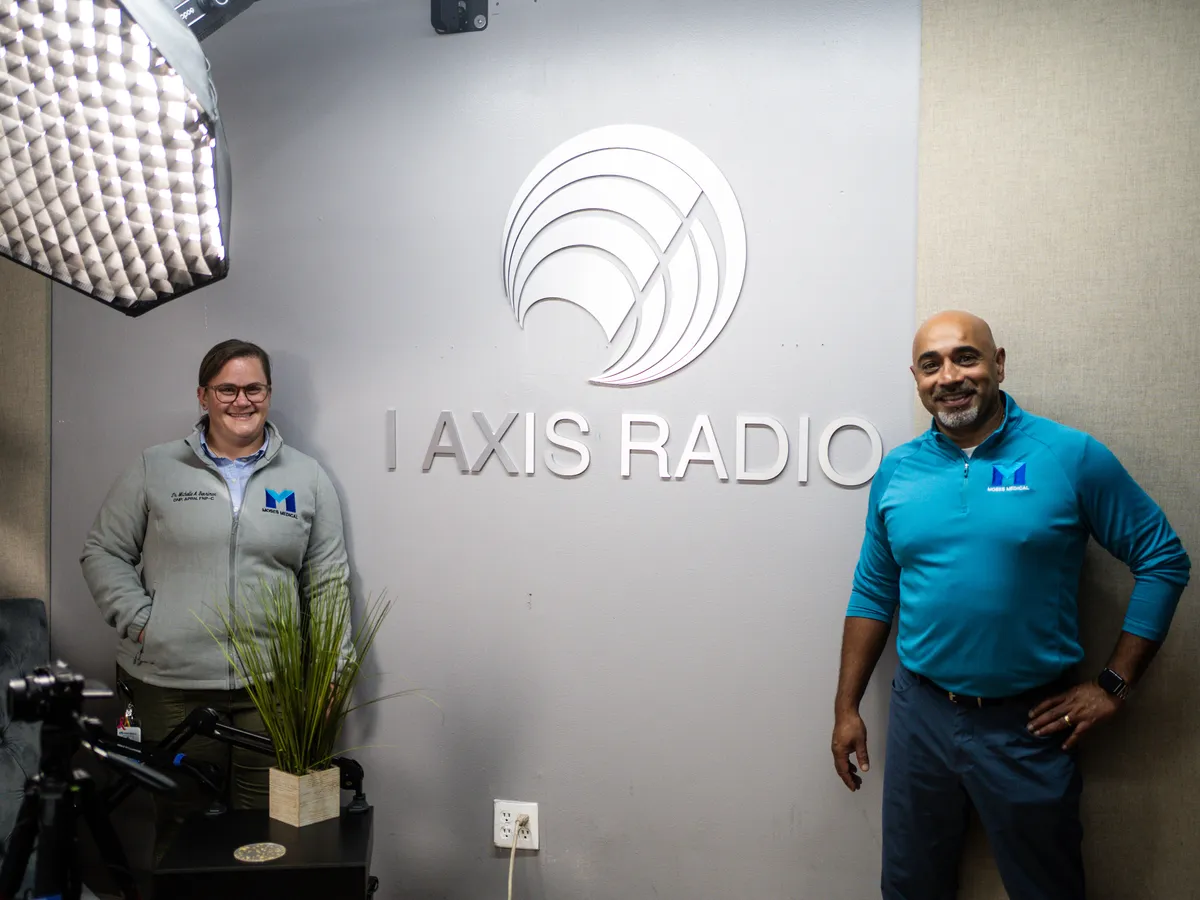
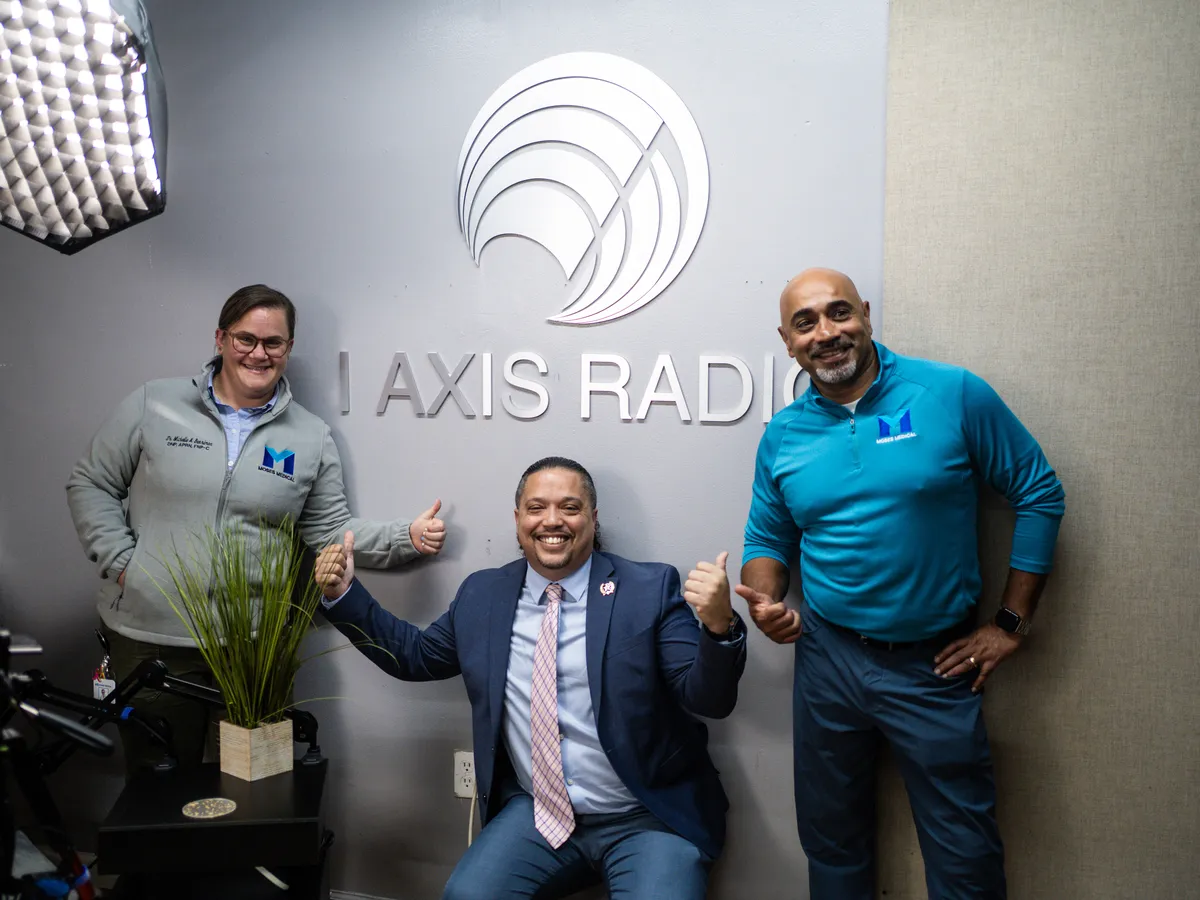
Dr. Benrimon and John Johnson at I Axis Radio on October 19.

After the event
Care options you can ask about
If you need a medical visit, our team can explain next steps for scheduling and coverage.
Need help choosing?
Start with the care option that fits your concern.
Browse care options or call the office. We can help narrow down the choices.