
Wound Care
Treatment for foot and ankle wounds that are not healing, including diabetic ulcers.
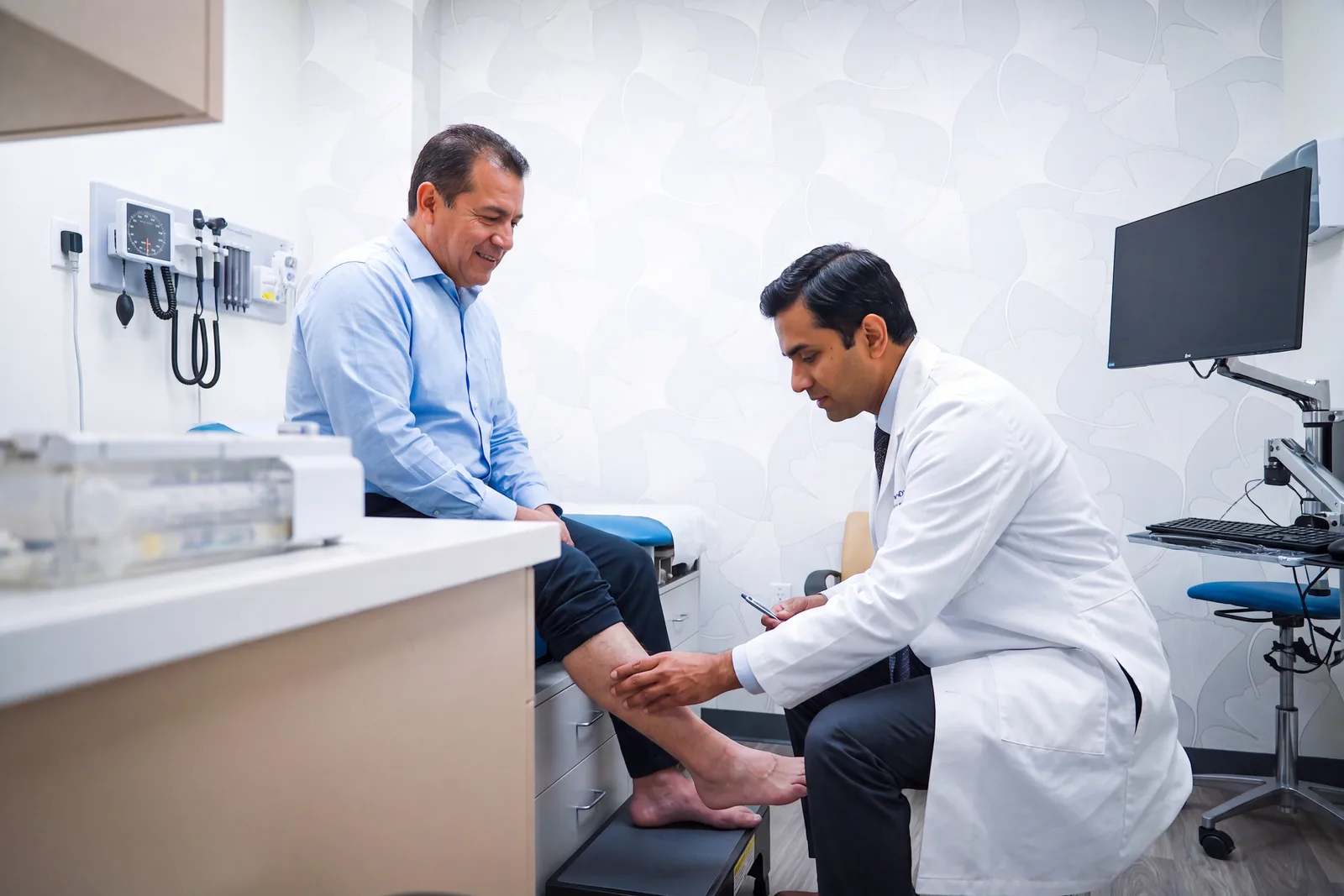
Our podiatry team evaluates and treats diabetic foot ulcers, slow-healing wounds on the foot and ankle, and skin breakdown related to pressure, footwear, or circulation. Care may include wound checks, dressing plans, offloading strategies, debridement when appropriate, and coordination with primary care. Wounds elsewhere on the body, and wounds that need advanced therapies or hospital-based care, are referred out.
Patients and caregivers receive training on wound management between visits, including what signs of infection require immediate attention.

Keep wound-care instructions close at home.
Confirm dressing steps, activity limits, warning signs, and the date the wound should be checked again.
About this visit
What this visit covers
See common reasons to request this visit, what may be discussed, and what information is helpful to bring.
When it fits
Common concerns
A wound has not improved, keeps reopening, or is getting more painful.
You have diabetes, circulation problems, swelling, or numbness near the wound.
You notice redness, warmth, drainage, odor, fever, or spreading skin changes.
You need guidance on dressings, wound checks, supplies, or referral decisions.
During the visit
What we may cover
Wound measurement and exam of skin, drainage, circulation, and infection warning signs.
Review of diabetes control, circulation history, footwear, pressure, and prior treatment.
Dressing plan, follow-up schedule, and decisions about cultures, imaging, podiatry, or referral if needed.
Before the visit
Helpful to bring
Recent wound photos, discharge notes, culture results, or imaging if available.
The dressings or supplies you are currently using.
When the dressing was last changed and what has changed since then.
Providers for this service

Questions
Frequently asked questions
What happens at a wound-care visit?
How often will follow-up be needed?
When should I seek prompt care?
Need help choosing?
Start with the care option that fits your concern.
Browse care options or call the office. We can help narrow down the choices.